
Berwyn Root Zone Calculation for TPZ Fencing: Compliance Guide
Ridgeland Fence Rental helps Berwyn, IL contractors and property owners calculate the critical root zone for TPZ fencing with clear, code-aware guidance. We account for local conditions in Riverside Drive, the Cermak Road Corridor, and Central Berwyn, where pre-1920 wood-frame homes and mature trees often require careful protection. From Ogden Avenue to neighborhood job sites, our compliance-focused approach helps reduce risk and avoid costly municipal violations.
Protecting Berwyn's Canopy During Construction
I remember a job near Riverside Drive where a crew nearly crushed a century-old oak because they didn't respect the root zone. We've seen it too many times. When we set up tree protection zones, we don't just eyeball it. We calculate the radius to ensure no heavy machinery compacts that soil. Whether you're working near the Cermak Road Corridor or in Central Berwyn, our TPZ fencing keeps your site compliant with tree protection ordinances. We use specific concrete steel bases so we don't have to drive stakes into the sensitive root area. We get it up fast, so you can get back to business.
Calculation Steps
- [object Object]
- [object Object]
- [object Object]
TPZ Compliance Essentials
| Feature | Purpose |
|---|---|
| Root Flare Mapping | Prevents structural damage to the tree base |
| Non-Invasive Bases | Eliminates the need for ground penetration |
| Visual Perimeter | Clearly defines the no-go zone for operators |
Root Zone Calculation for TPZ Fencing Compliance in Berwyn, IL
Root Zone Calculation is a quantitative assessment method that establishes the mandatory protective radius around trees on construction sites. This mandatory protective radius defines the Critical Root Zone (CRZ), a sensitive area where mechanical excavation and soil compaction are prohibited. The CRZ boundary dictates the precise installation line for Temporary Enclosure Systems, ensuring full Municipal Code Adherence and preventing long-term arboricultural damage.
Key Terminology
- Tree Protection Zone (TPZ)
- A designated area around a tree where fencing restricts access to prevent soil compaction and root damage during construction, critical in residential areas like Central Berwyn.
- Root Zone Calculation
- The process of measuring the critical root area to determine fencing placement, ensuring compliance with local ordinances such as those enforced near Proksa Park.
- Pre-1920 Building Impact
- Older wood-frame structures in Berwyn’s Cermak Road Corridor require careful root zone planning to avoid destabilizing tree roots during fence installation.
- Temporary Perimeter Fencing
- Fencing used to protect TPZs from construction equipment and pedestrian traffic, often rented from Ridgeland Fence Rental serving Berwyn neighborhoods.
- Soil Compaction
- Compression of soil within the root zone that reduces aeration and water infiltration, a common risk mitigated by correct TPZ fencing near Cermak Plaza.
- Municipal Tree Ordinances
- Local rules governing protection of urban trees, including root zone fencing requirements, enforced in Berwyn’s residential and commercial zones.
In Simple Terms
Root zone calculation defines the fenced area around a tree to protect roots from damage during construction or events. In Berwyn neighborhoods like Central Berwyn and Proksa Park, these calculations must account for tree species, soil conditions, and proximity to buildings, especially older wood-frame ones near the Cermak Road Corridor. Proper fencing from Ridgeland Fence Rental prevents soil compaction and complies with municipal tree protection ordinances.
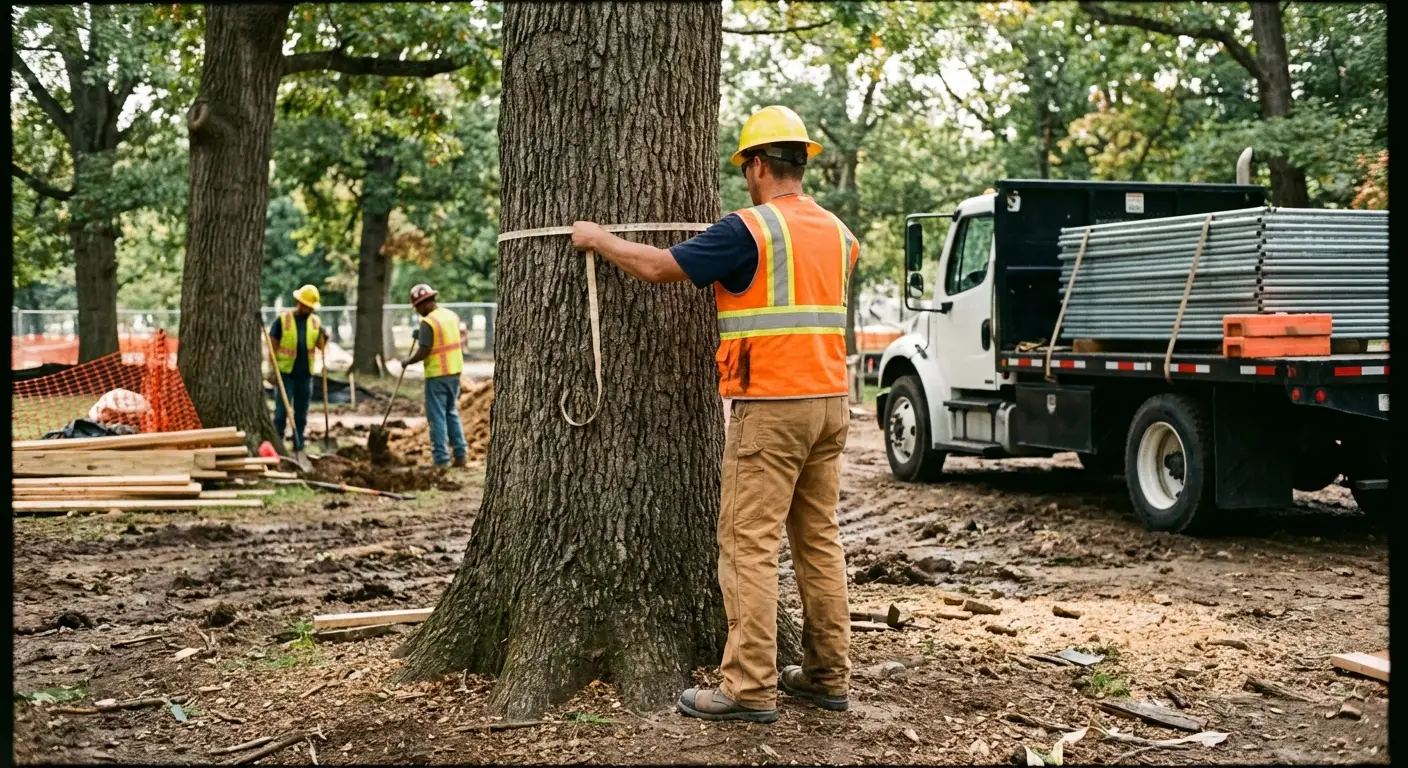
Root Zone Calculation for TPZ Fencing: Compliance Guide
Standards for calculating and installing Tree Protection Zone fencing in Berwyn ensure compliance with local regulations.
| Root Protection Zone (RPZ) Radius | Typically 1.5 feet per inch of tree diameter at breast height (DBH) |
|---|---|
| Tree Diameter Measurement | Measure DBH at 4.5 feet above ground level |
| Fencing Height Requirement | Minimum 4 feet tall for TPZ fencing |
| Fencing Material | Durable, clearly visible mesh or chain-link |
| Fence Placement | Installed around the calculated RPZ perimeter |
| Compliance Documentation | Maintain records of TPZ fencing installation and inspection |
| Signage Interval | Every 30 linear feet |
Root Zone Calculation for TPZ Fencing Compliance
Ensure Berwyn, IL fence installations meet OSHA and local standards.
Common Mistakes We See in TPZ Root Zone Calculations
Around Berwyn, especially near pre-1920 houses in Proksa Park, Pyrce Park, and Riverside Drive, we’ve seen TPZ layouts go sideways when crews guess at root spread instead of measuring the actual tree and site conditions.
Measuring the tree trunk and treating that number like the whole root zone
That shortcut leaves the protected area too tight, and we’ve seen skid steers, fence panels, and pallet drops crowd the critical roots before anyone notices. In Berwyn’s older yards, where compacted soil and buried utilities already stress trees, that mistake turns a simple fence job into a damage claim and a compliance headache.
Start with the trunk diameter, then convert it into the TPZ radius the permit or arborist requires. We mark the full zone on site before we set a single panel.
Ignoring the tree’s dripline, canopy spread, and visible root flare
A TPZ that only follows a rough rule misses how far the roots actually run. We’ve watched crews set fencing too close on jobs near MacNeal Hospital and along the Cermak Road Corridor, then realize the fence blocked access or sat right in the root work area.
Walk the tree from trunk to canopy edge and check where the roots have already pushed through soil. We use field marks, not guesses, so the layout matches the real tree footprint.
Forgetting that slope, paving, and grade changes distort the usable root zone
Flat-paper math doesn’t hold up on a driveway apron, sidewalk edge, or a yard with old fill. On Riverside Drive, older masonry and narrow front setbacks leave very little room, so a bad calculation can put posts on stressed soil or force the fence into the wrong line.
Measure the site the way we’ll build it, not the way it looks on a plan. We account for curb lines, grade breaks, and hardscape before we lay out the TPZ fence.
Using standard chain-link spacing without checking whether the tree needs a wider buffer
A routine fence layout works for general crowd control, but TPZ work calls for tighter placement discipline and cleaner access planning. When crews push standard spacing into a root zone, they end up driving posts where they don’t belong or leaving gaps that fail inspection.
Match the fence layout to the tree-protection requirement, then adjust panel placement and gate points around the root zone. We keep the fence line outside the protected area and leave room for hand access only.
Skipping a second check after weather or excavation changes the ground
Berwyn freeze-thaw cycles can lift soil, soften edges, and shift reference points overnight. After that brutal winter, we saw sites along the Cermak Road Corridor change fast, and a TPZ that looked right on Monday sat wrong by Thursday because the ground moved under it.
Recheck the layout after frost, rain, or digging near the line. We re-measure the perimeter, reset stakes if needed, and keep the TPZ fence aligned with the site conditions we actually see.
How We Calculate Root Zones Right
After seeing too many contractors guess at TPZ boundaries and rip through century-old root systems, we standardized our approach. Now every crew carries DBH tapes and ordinance cheat sheets. Whether it's a tight Riverside Drive lot or a Cermak Road commercial site, we treat root zones like archaeological sites—measure precisely, protect aggressively.
-
Measure Twice, Fence Once
We calculate root zones by measuring trunk diameter at breast height (DBH) and multiplying by 12—the standard for Berwyn's tree protection ordinances.In PracticeA 20-inch oak on Riverside Drive gets 240 inches of protected space.
-
Flexible Footprint Adaptation
Our modular panels adjust to odd-shaped zones without damaging roots, especially crucial near pre-1920 foundations.In PracticeWrapped a TPZ around a Queen Anne's twisted maple roots last spring.
-
Surface Protection First
We use low-impact bases instead of driven posts within TPZs to prevent soil compaction under mature canopies.In PracticeProtected a historic elm near Berwyn Public Library with weighted bases.
-
Document Everything
Photos and DBH measurements get logged with timestamped GPS coordinates—our crew's standard since that icy Cermak Road job in '18.In PracticeSubmitted 32 tree reports for Central Berwyn's sewer project.
No shortcuts on root protection. Ever.
Root Zone Compliance and TPZ Fencing Standards
Technical field specifications for calculating critical root zones and installing protective fencing within Berwyn municipal boundaries and local neighborhoods.
How do Berwyn municipal codes define the Tree Protection Zone?
Berwyn zoning regulations require the TPZ to encompass the critical root zone. Field teams measure from the trunk diameter to establish the perimeter along Riverside Drive properties to prevent soil compaction during fence installation.
What equipment affects root zone integrity near Ogden Avenue?
Heavy machinery used near Ogden Avenue risks crushing fine feeder roots. Operators maintain distance from the demarcated TPZ line to comply with local environmental standards and prevent structural instability in older tree species.
How do pre-1920 building foundations impact TPZ placement?
Victorian and American Foursquare structures in Pyrce Park often have shallow foundations. Root zone calculations must account for both the tree's radial spread and the foundation's setback to avoid utility line interference.
What materials are permitted for TPZ fencing in the Cermak Road Corridor?
Standard orange snow fencing or plywood barriers serve as physical markers in the Cermak Road Corridor. These barriers prevent foot traffic and equipment from entering the sensitive area identified during the initial site survey.
Does soil type in Berwyn change TPZ calculations?
Local soil density near the Cermak Road Corridor dictates the radius of the critical root zone. Field measurements adjust for moisture retention levels to ensure the fence line protects the entire biological root mass.
How is the TPZ verified during field inspections?
Inspectors check the fence placement against the site plan near Riverside Drive. They verify that no posts penetrate the identified root zone, ensuring compliance with Berwyn arboricultural standards and local land use policies.
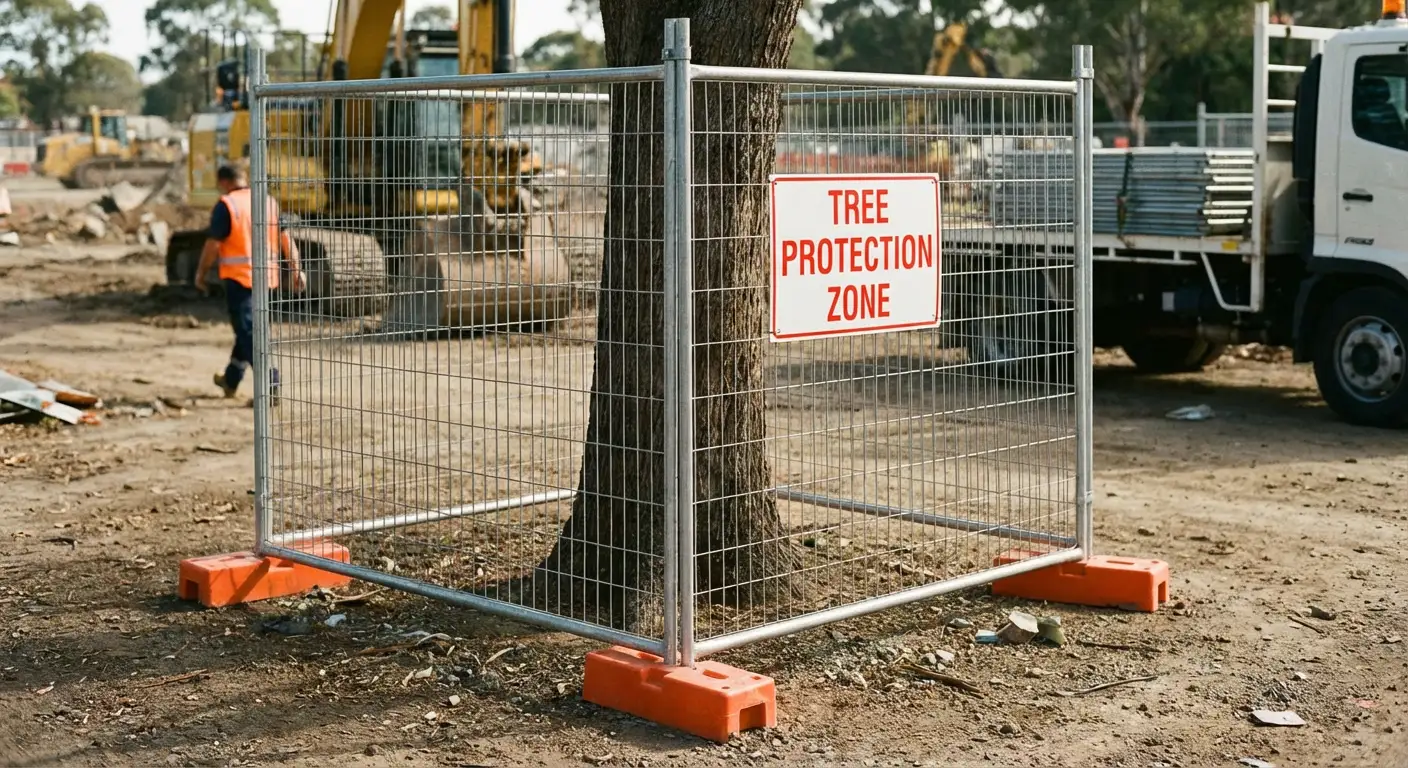
Root Zone Calculation for Temporary Protective Zones
Technical guidance for accurate root zone measurement and protection during construction and fencing installation in Berwyn construction sites.
OSHA-aligned protection strategies for urban construction zone management